page-loading-spinner

Food

by Chris Martenson

Fifty years ago, an international team of researchers was commissioned by the Club of Rome to build a computer simulation of exponential economic and population growth on a finite planet.

In 1971, its findings were first released in Moscow and Rio de Janeiro, and later published in 1972 under the title The Limits To Growth. The report concluded society would start experiencing serious declines in resources and population soon after 2030.

One of the original seventeen researchers involved in The Limits To Growth study, Dennis Meadows, joins us for the podcast this week. Fifty years later, what does he foresee ahead?

Dennis Meadows: The Limits To Growth
by Chris Martenson

Fifty years ago, an international team of researchers was commissioned by the Club of Rome to build a computer simulation of exponential economic and population growth on a finite planet.

In 1971, its findings were first released in Moscow and Rio de Janeiro, and later published in 1972 under the title The Limits To Growth. The report concluded society would start experiencing serious declines in resources and population soon after 2030.

One of the original seventeen researchers involved in The Limits To Growth study, Dennis Meadows, joins us for the podcast this week. Fifty years later, what does he foresee ahead?

by Chris Martenson

Marjory Wildcraft, founder of The Grow Network and author of Grow Your Own Groceries, explains how we can contribute to the local food production movement by using our own windowsills, planters and backyards as a food production system.

Even those with no prior experience can swiftly learn how to grow and raise a meaningful portion of their dietary calories.

Marjory Wildcraft: Growing Your Own Groceries
by Chris Martenson

Marjory Wildcraft, founder of The Grow Network and author of Grow Your Own Groceries, explains how we can contribute to the local food production movement by using our own windowsills, planters and backyards as a food production system.

Even those with no prior experience can swiftly learn how to grow and raise a meaningful portion of their dietary calories.

by Chris Martenson

Executive Summary

  • Clarify the specific outcomes you think are most important to prepare for
  • Models of regeneration (vs consumption/extraction)
  • High return-on-investment steps everyone should take
  • Make of yourself a model to inspire others

If you have not yet read Part 1: Save The World By First Saving Yourself, available free to all readers, please click here to read it first.

I worry that almost nobody is ready for what’s coming.

Not financially, not psychologically or emotionally. And not with respect to their current lifestyles.

My decade-plus tracking the data leads me to conclude that:

  • Food insecurity will be part of my future.
  • Energy abundance will diminish over time
  • The financial system has enormous losses baked right in and they cannot be avoided
  • Our local city/town or communities will feel the impacts of the loss of purchasing power coursing through their veins. This ‘simplification’ will be very destructive to those unready or unable to adapt.
  • Either humans voluntarily stop putting too much carbon into the atmosphere or nature will force that outcome under far less favorable terms.
  • Travel will become quite limited and perhaps become an unaffordable luxury within the next couple of decades.

Do you share these?

If so, I don’t want to panic you. Quite the opposite. I want you to realize that while these are potential eventualities you can’t control, you can do plenty about how they’ll impact you.

These are the smart responses virtually anyone can take that will offer you tremendous advantage against…. (Enroll now to continue reading)


Becoming Tomorrow’s Hero
PREVIEW by Chris Martenson

Executive Summary

  • Clarify the specific outcomes you think are most important to prepare for
  • Models of regeneration (vs consumption/extraction)
  • High return-on-investment steps everyone should take
  • Make of yourself a model to inspire others

If you have not yet read Part 1: Save The World By First Saving Yourself, available free to all readers, please click here to read it first.

I worry that almost nobody is ready for what’s coming.

Not financially, not psychologically or emotionally. And not with respect to their current lifestyles.

My decade-plus tracking the data leads me to conclude that:

  • Food insecurity will be part of my future.
  • Energy abundance will diminish over time
  • The financial system has enormous losses baked right in and they cannot be avoided
  • Our local city/town or communities will feel the impacts of the loss of purchasing power coursing through their veins. This ‘simplification’ will be very destructive to those unready or unable to adapt.
  • Either humans voluntarily stop putting too much carbon into the atmosphere or nature will force that outcome under far less favorable terms.
  • Travel will become quite limited and perhaps become an unaffordable luxury within the next couple of decades.

Do you share these?

If so, I don’t want to panic you. Quite the opposite. I want you to realize that while these are potential eventualities you can’t control, you can do plenty about how they’ll impact you.

These are the smart responses virtually anyone can take that will offer you tremendous advantage against…. (Enroll now to continue reading)


by Chris Martenson

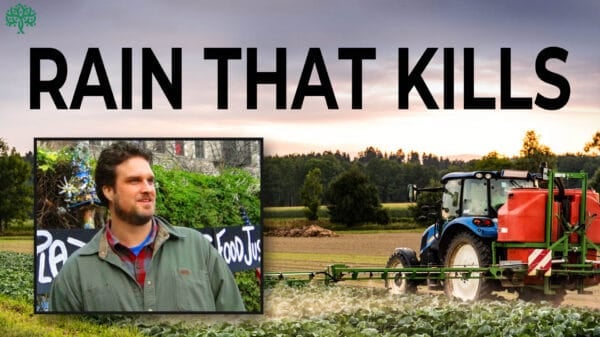
In November, a very concerning report — Glyphosate: Unsafe On Any Plate — was released by The Detox Project and Food Democracy Now!, raising the alarm of the high levels of glyphosate in the US food supply and the (deliberate?) low levels of awareness of its associated health risks.

Dave Murphy, executive director of Food Democracy Now!, joins us this week to explain the finding of this new report on the world's most-used herbicide (more commonly known by its retail brand: Roundup). As happened in past decades with the alcohol and tobacco industries, there's compelling evidence that profits have taken a priority over consumer safety — and as public health concerns are being raised, Big Ag is circling its wagons and attacking the questioners rather than embracing open scrutiny.

Are we being poisoned in the pursuit of profit?

Dave Murphy – Glyphosate: Unsafe On Any Plate
by Chris Martenson

In November, a very concerning report — Glyphosate: Unsafe On Any Plate — was released by The Detox Project and Food Democracy Now!, raising the alarm of the high levels of glyphosate in the US food supply and the (deliberate?) low levels of awareness of its associated health risks.

Dave Murphy, executive director of Food Democracy Now!, joins us this week to explain the finding of this new report on the world's most-used herbicide (more commonly known by its retail brand: Roundup). As happened in past decades with the alcohol and tobacco industries, there's compelling evidence that profits have taken a priority over consumer safety — and as public health concerns are being raised, Big Ag is circling its wagons and attacking the questioners rather than embracing open scrutiny.

Are we being poisoned in the pursuit of profit?

Total 82 items