Podcast
Lance Roberts sees trouble ahead.
As chief investment strategist of Clarity Financial and chief editor of Real Investment Advice, Lance issues commentary weekly on the financial markets. He sees a major market correction/crash dead ahead, likely in early 2019 as the US economy offically slides back into recession — though he's open to it happening sooner than that.
Based on the huge debt/decifit excess that have built up in the economy, paired with the tremendous overvaluations in asset prices seen in today's markets, Lance expects economic growth to remain anemic (at best) for the coming decade:
Lance Roberts: The Markets Are Now Waving A Huge Red Flag
by Chris MartensonLance Roberts sees trouble ahead.
As chief investment strategist of Clarity Financial and chief editor of Real Investment Advice, Lance issues commentary weekly on the financial markets. He sees a major market correction/crash dead ahead, likely in early 2019 as the US economy offically slides back into recession — though he's open to it happening sooner than that.
Based on the huge debt/decifit excess that have built up in the economy, paired with the tremendous overvaluations in asset prices seen in today's markets, Lance expects economic growth to remain anemic (at best) for the coming decade:
Executive Summary
- Future shock (on track, unfortunately)
- Hope for the best, plan for the worst
- What too little water means to those living without reliable rains
- Planning for too much water
- How great garden soils mitigate…well…practically every ill
- Electricity at risk. Plan accordingly.
- Storms and rising seas. Got any coastal real estate in low lying areas? Get rid of it.
If you have not yet read Time For Some Climate Honesty, available free to all readers, please click here to read it first.
Truth be told, I would prefer to live in a world that is 3 degrees warmer than 3 degrees cooler. Ice ages and cooling are associated with crop failures and famines. In New England, where I live, there was a mile or two of ice overhead as recently as 10,000 years ago.
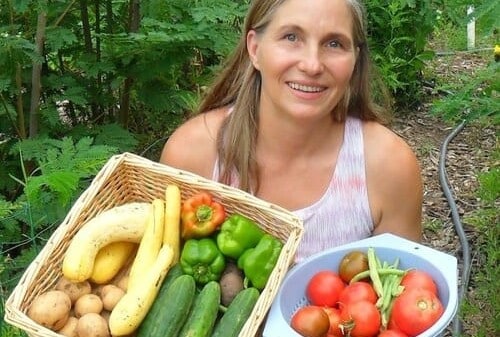
I love my garden here in western MA and know nothing at all about how to grow veggies on top of a mile-thick sheet of ice. I suspect it’s difficult.
So I guess that’s the best spin I can put on it. Warmer is better than colder, all things being equal.
However, beyond that there are a growing number of new risks that we need to take into account. Heat waves. Too much rain. Too little rain. Punishing arctic cold making winters long and delaying spring planting. Crop failures.
These are all things that I laid out in the Crash Course back in 2008. Here’s what I said about the convergence of dangerous trends in the…
Building Resilience In A Warming World
PREVIEW by Chris MartensonExecutive Summary
- Future shock (on track, unfortunately)
- Hope for the best, plan for the worst
- What too little water means to those living without reliable rains
- Planning for too much water
- How great garden soils mitigate…well…practically every ill
- Electricity at risk. Plan accordingly.
- Storms and rising seas. Got any coastal real estate in low lying areas? Get rid of it.
If you have not yet read Time For Some Climate Honesty, available free to all readers, please click here to read it first.
Truth be told, I would prefer to live in a world that is 3 degrees warmer than 3 degrees cooler. Ice ages and cooling are associated with crop failures and famines. In New England, where I live, there was a mile or two of ice overhead as recently as 10,000 years ago.
I love my garden here in western MA and know nothing at all about how to grow veggies on top of a mile-thick sheet of ice. I suspect it’s difficult.
So I guess that’s the best spin I can put on it. Warmer is better than colder, all things being equal.
However, beyond that there are a growing number of new risks that we need to take into account. Heat waves. Too much rain. Too little rain. Punishing arctic cold making winters long and delaying spring planting. Crop failures.
These are all things that I laid out in the Crash Course back in 2008. Here’s what I said about the convergence of dangerous trends in the…
As far as existential threats to the human species go, pandemics rank near the top of the list.
What's the probability of an agressive, highly-fatal outbreak occuring soon? Is it high enough to worry about? And if one occurs, what can/should we do to protect ourselves and our loved ones?
To address these questions, we interview John M. Barry, author of the award-winning New York Times best-seller The Great Influenza: The Epic Story of the Deadliest Plague in History.
John Barry: The Pandemic Risk
by Chris MartensonAs far as existential threats to the human species go, pandemics rank near the top of the list.
What's the probability of an agressive, highly-fatal outbreak occuring soon? Is it high enough to worry about? And if one occurs, what can/should we do to protect ourselves and our loved ones?
To address these questions, we interview John M. Barry, author of the award-winning New York Times best-seller The Great Influenza: The Epic Story of the Deadliest Plague in History.
Do you run the tap for 30 seconds or a couple of minutes to ensure you are getting "clean water" instead of the water that has been standing around in the pipes? A new study shows that flushing may make things worse. Learn more….
https://www.treehugger.com/clean-water/flushing-water-pipes-can-increase-lead-exposure.html
Flushing Water Pipes Can Increase Lead Exposure
by JWDo you run the tap for 30 seconds or a couple of minutes to ensure you are getting "clean water" instead of the water that has been standing around in the pipes? A new study shows that flushing may make things worse. Learn more….
https://www.treehugger.com/clean-water/flushing-water-pipes-can-increase-lead-exposure.html