


For good reason, there’s a lot of attention on the effect of the Iran war and the closing of the Strait of Hormuz on oil prices, as well as the other missing products and elements.
But the current stock price explosion has its roots in 2022. We can clearly see that a massive reliquification event was initiated in mid-2022, the effects of which are still reverberating through the system.
Which means the supply shocks from the Iran war are going to combine with a veritable wall of freshly minted and printed money (and a ton of new leverage) to create an absolutely shocking level of inflation over the next few years.
Beginning with the so-called “peace deals” that have been a daily part of our informational landscape for the past 60 days, it’s reasonable to conclude that one remains as distant today as ever. Neither side seems to do much more than reiterate their prior wish-lists for ending the war. Not much actual movement can be detected from the tweets and poorly sourced news articles.
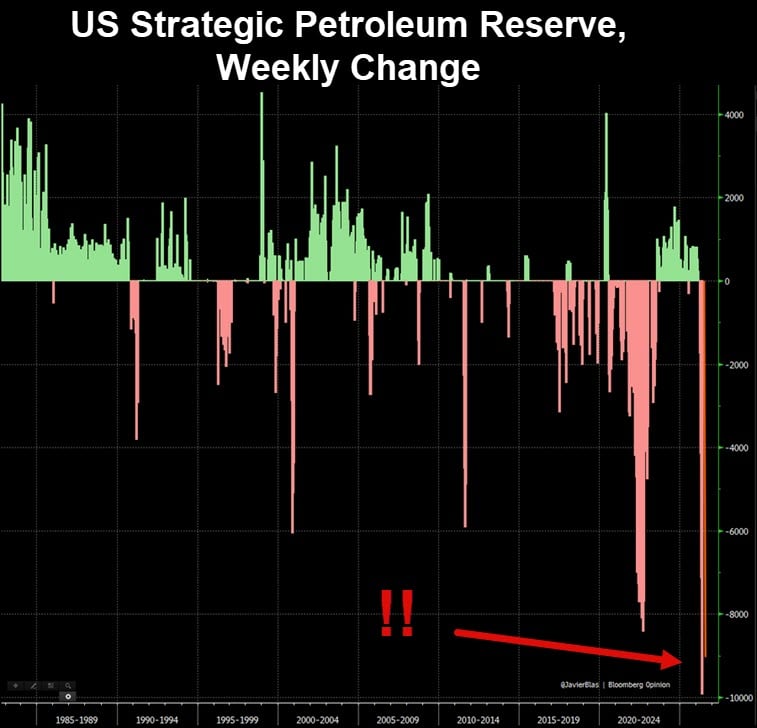
But the oil clock ticks down, especially for the US, which is dishoarding its energy treasure at a furious and unprecedented clip.
The US’s own stocks of gasoline and diesel are now plunging toward levels not seen over the past 17 years.
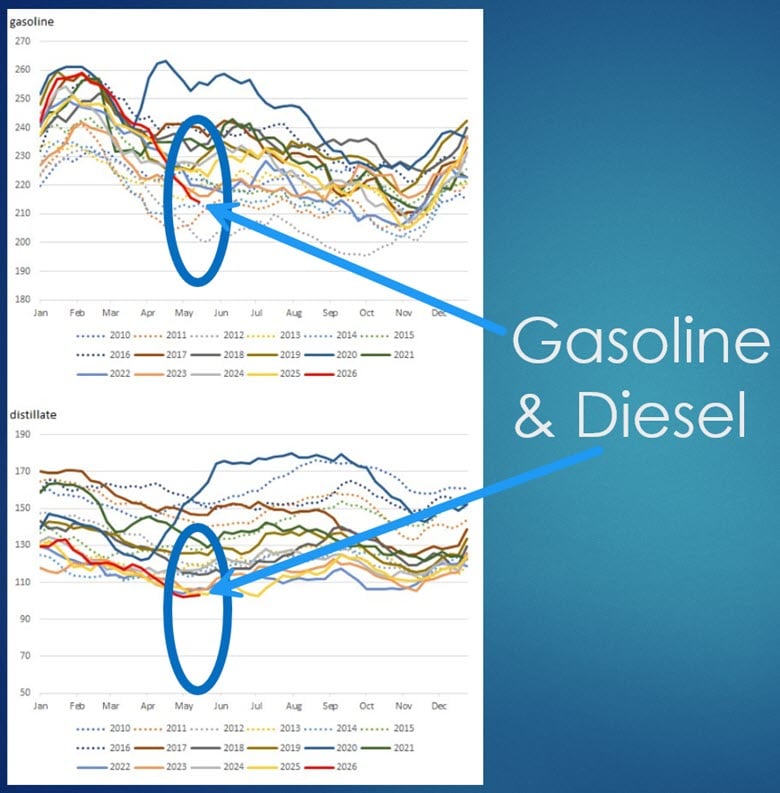
The chance of avoiding an energy price shock seems extremely remote at this point, and we should all play the odds and prepare for much higher oil and gas prices, if not outright shortages.
The Money Flood
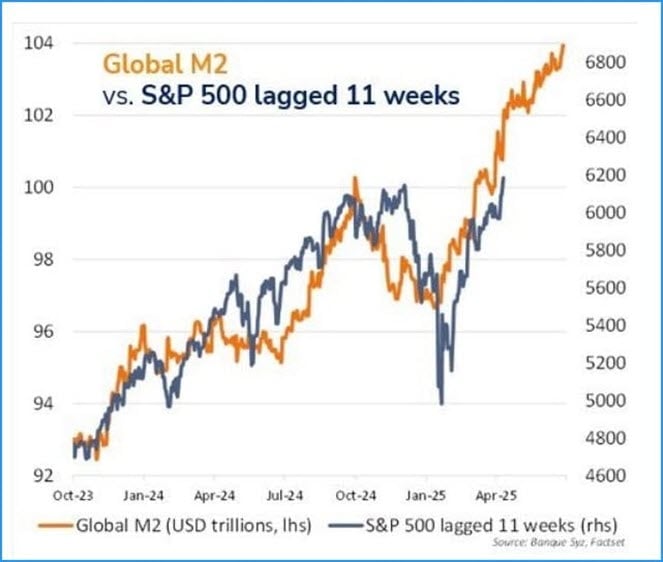
If you want to know how to “invest” successfully, it can be as simple as “buy stocks when the money supply is expanding.”
“M2” is a broad definition of what we call ‘money’ (but is actually debt-based fiat currency; to be called ‘money’ it must be a reliable store of value). Note the very tight correlation between M2 money and the S&P 500:
That seems important, so let’s take a peek at global M2:
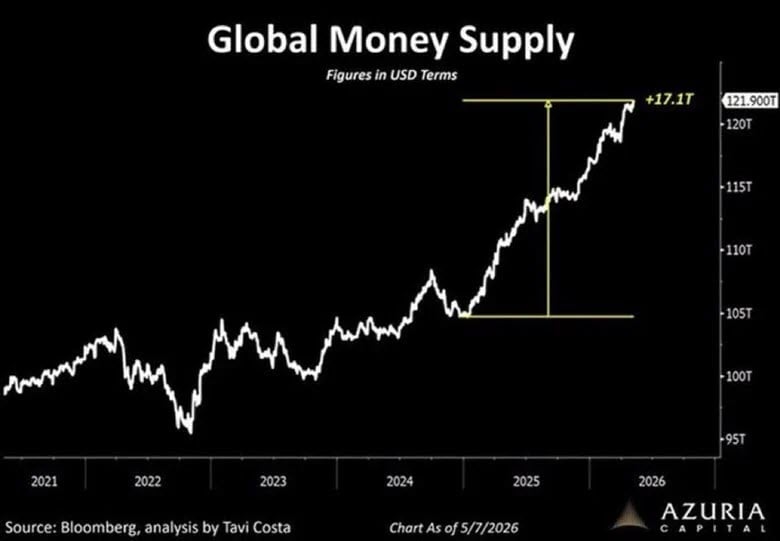
Holy smokes!! Global M2 is up $26 trillion since 2022 and a whopping $17 trillion since the beginning of 2025. Where does one park tens of trillions of dollars? It has to go … somewhere.
At first, it has gone into stocks…and gold and silver probably too. But now it’s going to bleed back into the wider system of economic products in the form of inflation. On that front, it sure looks like we’re about to repeat the 1970s-1980’s “double hump” inflation.
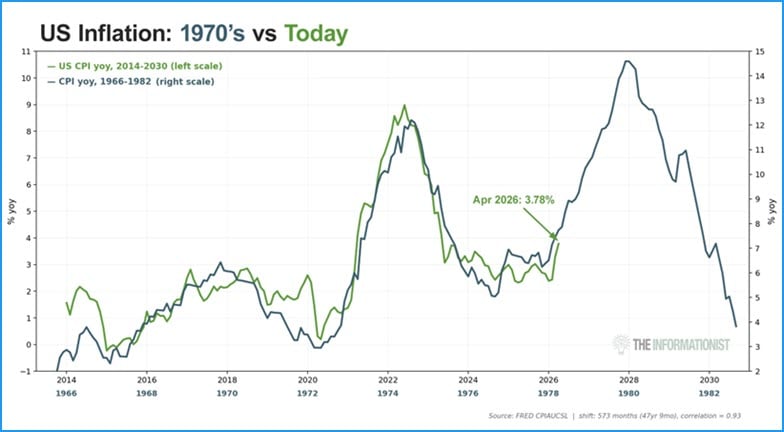
(Source – James Lavish)
We can already see that scenario playing out when we view this chart from Luke Gromen showing how the Producer Price Index (PPI) leads the Consumer Price Index (CPI) by 3-6 months.
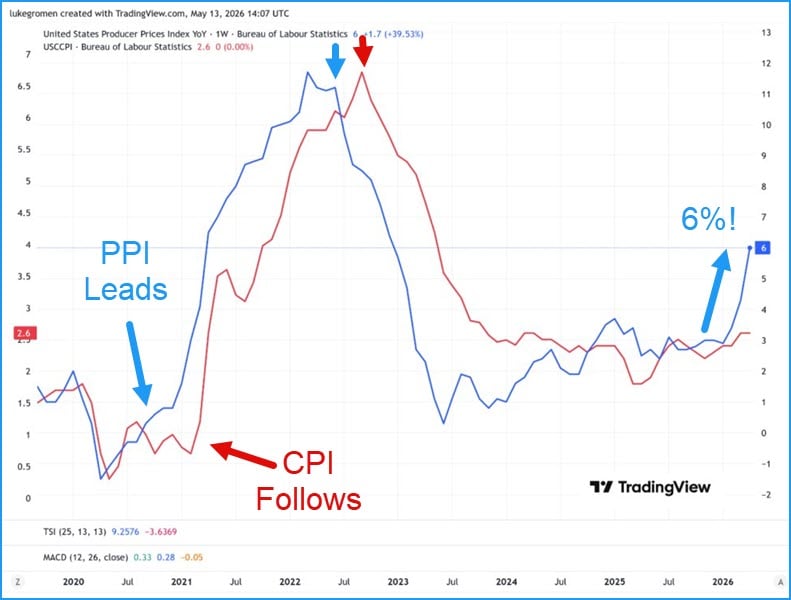
Well, it sure looks like we’re 3-5 months away from a 6% CPI print; just in time for the mid-term elections.
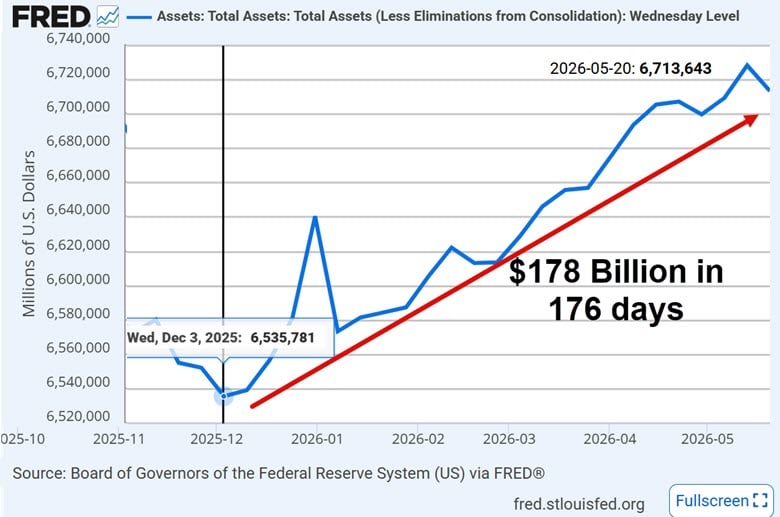
Not helping this is the possibility that the US government has what Elon Musk called “Magic Money Machines” right before his DOGE experiment was unceremoniously terminated by a suddenly flustered Trump administration. Nor is the fact that since December 3rd, 2025, the Federal Reserve has been dumping ~$1 billion per day, seven days a week, into the US financial system.
The conclusion here is both serious and urgent for people who are either retired or about to retire; you need to factor in potentially much higher rates of inflation into your portfolio planning. The predicted extremely high rates of future inflation may not materialize, but everyone should have a plan in place in case they do.

00:31 The Energy Shock and Market Reactions
02:15 The Fog of Diplomacy and Oil Prices
05:22 Inflation and Energy Crisis
09:08 Strategic Petroleum Reserve and Political Implications
11:08 The Global Money Flood
14:50 Market Dynamics and Risk Management
26:21 Political Implications of Monetary Policy
27:36 The Bubble Economy: Speculation and Margin Debt
30:10 Liquidity and the Role of the Federal Reserve
34:22 The Mystery of Offshore Finance
38:15 The Infinite Money Glitch
46:11 Inflation: A Persistent Challenge
50:40 Navigating Inflation and Risk Management
55:44 The Impact of Inflation on Lifestyle
59:28 Shifts in Fixed Income Strategies
01:04:16 Understanding the ‘Magic Money Machines’
01:09:22 The Tale of Two Economies
01:14:10 Generational Perspectives on Financial Challenges
FINANCIAL DISCLAIMER:
The information contained in this video and the resources available for download through our affiliated website are not intended as and shall not be understood or construed as financial advice, nor should be interpreted as a solicitation to sell or offer to sell investment advisory services. No person who currently works for or contracts with Peak Prosperity or Peak Financial Investing is an attorney or accountant, nor are we holding ourselves out to be, and the information contained in the video and on the website is not a substitute for legal or tax advice from a professional who is aware of the facts and circumstances of your individual situation. While Peak Financial Investing is a registered investment advisor, please note that this podcast is not intended to be investment advice.
All information has been obtained from sources believed to be reliable, but its accuracy is not guaranteed. There is no representation or warranty as to the current accuracy, reliability or completeness of, nor liability for, decisions based on such information and it should not be relied on as such. We have done our best to ensure that the information provided is accurate and provides what we feel is valuable information. The views expressed are subject to change based on market and other conditions.<
No guests or clients appearing on the podcast receive any form of compensation for their appearance and obtained no other benefit from either Peak Prosperity or Peak Financial Investing.
All investing involves risks including the possible loss of capital. Asset allocation and diversification does not ensure a profit or protect against loss. Please note that out- performance does not necessarily represent positive total returns for a period. There is no assurance that any investment strategy will be successful. All investments carry a certain degree of risk. Dividends are not guaranteed, and a company’s future ability to pay dividends may be limited.
Additional important disclosures for Peak Financial Investing may be found in our Form ADV Part 2A, which can be found at https://adviserinfo.sec.gov/firm/summary/319672.

 by cmartenson