


In this episode of Finance U, my guest is Michael Gayed, who claims that the stock market may be crashed to save bonds.
But maybe stocks were going to crash all on their own, given the ridiculous fantasy finances that are immediately apparent when one peeks under the AI hood.
Sure, AI is powerful, and both Michael and I use it daily, but real-world experience shows that at scale it remains error-prone and, given that, perhaps not all that much cheaper than human labor. Yet.
Or perhaps it will be the SpaceX IPO that will suck out critical liquidity at a shaky time when stocks are already priced higher than at any other time in history?
At 93x revenues and a $1.77 trillion valuation, SpaceX is, by far, the most ambitious IPO in history.
Michael keeps a close eye on credit spreads (the yield difference between higher and lower-rated bonds). He observes that the Fed prioritizes credit spreads (default risk) over stock prices. If forced to choose, he says, the Fed will “crash stocks to save bonds,” which will, in turn, give it the air cover it needs to cut interest rates (badly needed for U.S. debt refinancing).
Michael has long been a keen student of Japan and the carry trade. He’s long-predicted that Japan will suffer severe consequences when the carry trade finally reverses, a process that is now underway as evidenced by the blow-out in Japan’s long bond yields.
Japan has intervened at least 3 times in recent months to prevent the yen from breaching the 160 (to the dollar) level. The most recent intervention was the largest in the series, and it didn’t even last 2 months, indicating the degree of stress the Japanese monetary (and soon financial) system is under.
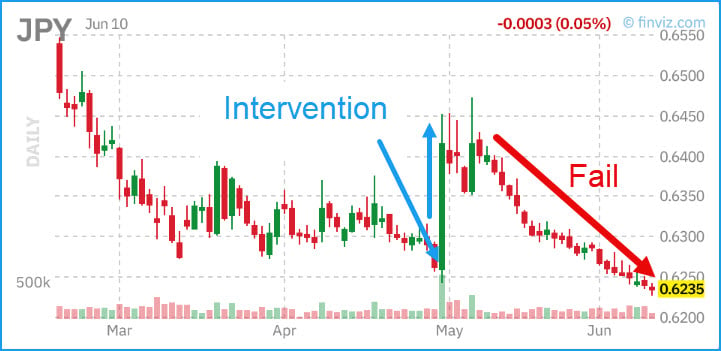
Adding to Japan’s woes is the Iran war and the closure of the Strait of Hormuz.
Michael sees the Iran conflict as keeping oil prices elevated for longer than markets currently project. Rising oil + weak yen = cost-push inflation in Japan (and globally). Again, this adds to the pressures on Japan’s currency and bond markets.
Add it all up, and Michael is bearish on several asset classes but is not perma-bearish. He says that opportunities exist in defensives (utilities, healthcare, consumer staples), gold, long-duration Treasuries (tactically for the risk-off play), value, non-tech, and international/real assets.
Like me, he sees true diversification as including skills, health, and local resilience beyond portfolios and money.
As always, these are risky times. During such moment passive investing absorbs the risk, and a tactical, risk-managed approach offers a superior path to limiting downside losses and participating in the areas where a bullish stance can pay off.

Timestamps
00:26 Introduction to Current Market Dynamics
03:18 The AI Narrative and Market Valuations
06:26 The Role of Credit Spreads and Fed Responses
09:17 Japan’s Economic Challenges and the Reverse Carry Trade
12:25 The Impact of Global Events on Financial Markets
15:26 The Role of Leverage in Market Crashes
18:33 The Future of AI and Market Expectations
21:25 The Influence of Speculation and Manipulation in Markets
25:27 Conclusion and Future Outlook
34:12 The Inflation Crisis in Japan
36:25 The Reality of Cryptocurrency and Market Dynamics
41:43 Liquidity Concerns and Market Signals
46:25 The Oil Market and Economic Implications
51:47 Stagflation and Government Spending Challenges
56:15 The Future of AI and Economic Resilience
FINANCIAL DISCLAIMER:
The information contained in this video and the resources available for download through our affiliated website are not intended as and shall not be understood or construed as financial advice, nor should be interpreted as a solicitation to sell or offer to sell investment advisory services. No person who currently works for or contracts with Peak Prosperity or Peak Financial Investing is an attorney or accountant, nor are we holding ourselves out to be, and the information contained in the video and on the website is not a substitute for legal or tax advice from a professional who is aware of the facts and circumstances of your individual situation. While Peak Financial Investing is a registered investment advisor, please note that this podcast is not intended to be investment advice.
All information has been obtained from sources believed to be reliable, but its accuracy is not guaranteed. There is no representation or warranty as to the current accuracy, reliability or completeness of, nor liability for, decisions based on such information and it should not be relied on as such. We have done our best to ensure that the information provided is accurate and provides what we feel is valuable information. The views expressed are subject to change based on market and other conditions.<
No guests or clients appearing on the podcast receive any form of compensation for their appearance and obtained no other benefit from either Peak Prosperity or Peak Financial Investing.
All investing involves risks including the possible loss of capital. Asset allocation and diversification does not ensure a profit or protect against loss. Please note that out- performance does not necessarily represent positive total returns for a period. There is no assurance that any investment strategy will be successful. All investments carry a certain degree of risk. Dividends are not guaranteed, and a company’s future ability to pay dividends may be limited.
Additional important disclosures for Peak Financial Investing may be found in our Form ADV Part 2A, which can be found at https://adviserinfo.sec.gov/firm/summary/319672.
 by kenwdelong
