


This podcast was riveting, and helped snap a number of critical economic and geopolitical elements into focus.
The world may be witnessing the simultaneous breakdown of oil-market price discovery, U.S. dollar hegemony, the traditional Treasury “safe haven,” and the geopolitical order built around American military power. When the dust finally settles on the Iran war China will emerge as a more dominant force in the region as the US’s influence and power wanes.
We explore these themes in this podcast with Philip Pilkington — the macroeconomist and investment pro who’s one of today’s sharpest voices on oil markets, energy geopolitics, and the real forces driving the global economy. Philip is the author of the book The Reformation in Economics and The Collapse of Global Liberalism, and is the co-host of the Multipolarity Podcast which explores geopolitics and macroeconomics.
We live in a world where Trump now openly sells first access to his Tweets to financial insiders, a clearly illegal operation if you or I did such a thing, so it perhaps should come as no surprise that the Trump administration is manipulating oil futures.
Philip Pilkington argues that oil has never been entirely “free” because of OPEC’s influence, but contends that recent events strongly suggest a much more aggressive form of direct intervention through paper markets and potentially coordinated trading.
The disconnect between oil prices and physical supplies is, in a word, extraordinary. Despite the war around the Strait of Hormuz and major disruptions to global energy flows, oil prices have remained remarkably subdued. Meanwhile, product and crude inventories continue to head lower and lower.
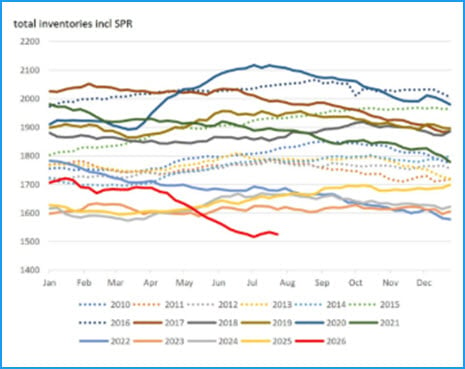
Philip argues that if the oil prices were correct, then inventories would be stable. But they are not, which means the price of oil has been set too low relative to supplies.
The real crisis is found in refined products, not the price of crude oil itself. Diesel, heating oil, jet fuel, gasoline, and other products are where shortages can become economically devastating.
The ever-widening crack spreads suggest that refiners and end users may already be experiencing a much tighter physical market than the headline crude price indicates.
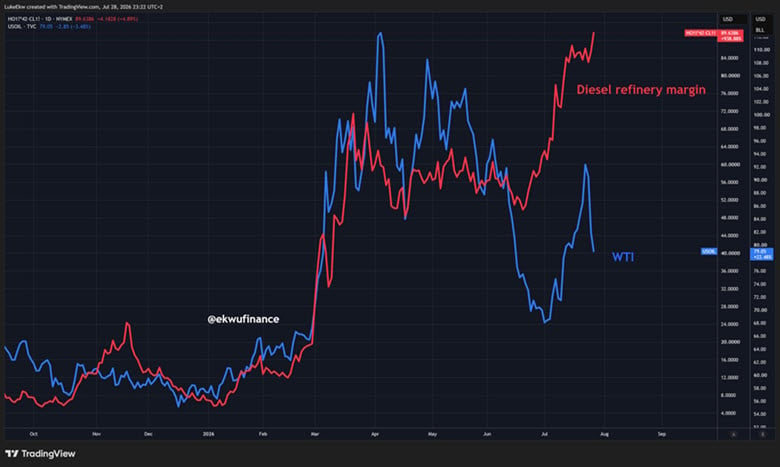
Philip contends that the oil price interventions may ultimately be as much about keeping the bond markets calm as holding down the price of oil for short-term political aims.
But artificially subdued prices can conceal physical scarcity for only so long. Once inventories hit critical thresholds, genuine price discovery could return with extraordinary violence.
As the price of oil rises, so too do bond yields because the price of oil is baked into every physical product to some degree, and bonds hate inflation. Oil goes up, product prices go up via cost-push inflation, and bond yields go up.
Philip’s insights into the geopolitical realignments that are underway in Asia are not to be missed. With Taiwan, Japan and South Korea all 100% dependent on hydrocarbon imports, China is well-situated to exert greater influence over all three countries.
Central banks the world over have taken notice and responded by buying gold.
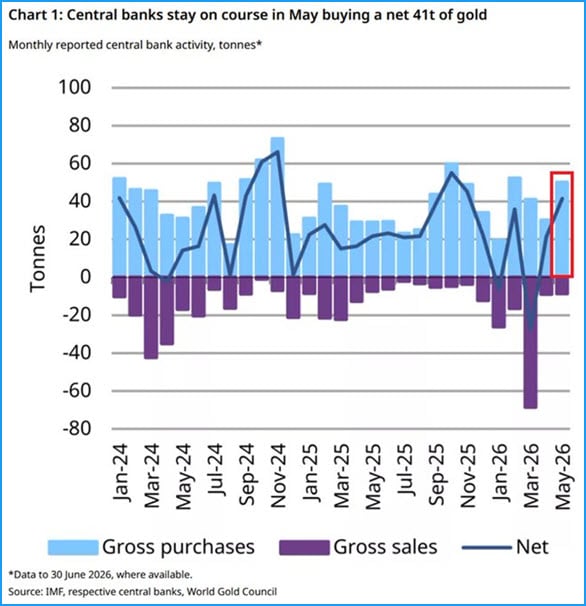
China is suspected to have accumulated far more gold than officially stated, with some estimates putting the nation’s stash at over 30,000 tonnes.
The buying spree began in earnest in 2022 after the U.S. ‘froze’ (i.e. ‘stole’) Russia’s sovereign reserves. Because of this, the old “flight to safety” model for the U.S. dollar appears to be breaking down.
Historically, crises pushed foreign capital into U.S. Treasuries, strengthening both bonds and the dollar.
Philip raises the possibility that a future crisis could produce higher U.S. yields and a weaker dollar simultaneously. In other words, the U.S. might find itself on the receiving end of a dynamic that usually only plagues emerging market countries.
So, keep your eyes peeled for the combination of rising US Treasury rates and a declining dollar.
We also discussed the AI bubble and how ugly that will be when it bursts. It’s pretty much the only thing holding the US economy out of recession at the moment.
Finally, we are facing a polycrisis. Energy shortages feed into transportation, fertilizer, food production, inflation, interest rates, currencies, financial markets, and geopolitics. A disruption that begins with oil can therefore cascade through virtually every major economic system. On top of this, we have to add missing sulfur, helium, aluminum, and a host of petrochemical feedstocks.
Tune in to hear it all.

Timestamps
00:33 The Oil Market Makes No Sense
02:35 Has the Oil Market Been Manipulated?
04:49 Russia, Sanctions and the Oil Rerouting Game
07:15 How Paper Markets Can Be Manipulated
09:14 The Dangerous Logic of Suppressing Oil Prices
10:30 Wash Trades and the Mystery Oil Whale
12:37 Oil Inventories Are Sending a Warning
14:30 The Theory Behind the Oil Price Suppression
16:44 The Real Oil Price May Be Far Higher
19:07 The China Deal and the 60-Day Countdown
21:06 Is the SPR Being Pushed Toward Its Limits?
22:00 Why China Slashed Its Oil Imports
23:01 China, Gold and the Price-Control Theory
24:49 The Refinery Mystery and Missing Data
27:05 An Oil Shock Could Become a Food Crisis
30:13 Nine Meals From Revolution
31:01 The Coming Diesel and Energy Crisis
32:29 Oil Prices, Inflation and Bond Yields
34:33 Is the Treasury Secretly Controlling the Curve?
36:55 Where Are the Bond Vigilantes?
39:10 The AI Bubble and Market Fragmentation
41:15 Why an AI Crash Could Trigger a Dollar Crisis
42:10 The Circular Financing Behind the AI Boom
44:01 When Rising Yields Stop Supporting the Dollar
46:50 The End of the Dollar Flight to Safety
48:43 Why Gold Broke Its Old Relationship With Rates
51:20 Gold Becomes the New Numeraire
52:32 China, Gold and the BRICS Challenge
53:00 China’s Real Strategy for Iran and Taiwan
55:21 The Strait of Hormuz and China’s Endgame
58:18 How China Could Win Taiwan Without Invading
59:22 China Holds the Energy Cards in Asia
61:00 Has America Lost Its Ability to Project Power?
64:08 Why Europe Is More Vulnerable Than America
66:40 The West’s Coming Living-Standards Crisis
67:59 China Plans While the West Grifts
69:50 The Two-Tier American Economy
70:38 How Inflation Could Crush Living Standards
73:57 What a 50% Living-Standards Decline Looks Like
74:22 The Energy Consumption Reality Check
75:39 Energy Lockdowns Are Coming
77:36 Why Energy Rationing Could Break the Economy
78:39 The COVID Lockdown as a Template
80:31 The Pain of an Energy Lockdown
81:08 Would Energy Lockdowns Be Worse Than COVID?
81:53 Preparing for the Coming Crisis
84:01 Is the West Being Deliberately Reshaped?
85:15 The Rise of a Multipolar World
86:00 Final Thoughts and Multipolarity
86:10 The Grand Theory of Everything
FINANCIAL DISCLAIMER:
The information contained in this video and the resources available for download through our affiliated website are not intended as and shall not be understood or construed as financial advice, nor should be interpreted as a solicitation to sell or offer to sell investment advisory services. No person who currently works for or contracts with Peak Prosperity or Peak Financial Investing is an attorney or accountant, nor are we holding ourselves out to be, and the information contained in the video and on the website is not a substitute for legal or tax advice from a professional who is aware of the facts and circumstances of your individual situation. While Peak Financial Investing is a registered investment advisor, please note that this podcast is not intended to be investment advice.
All information has been obtained from sources believed to be reliable, but its accuracy is not guaranteed. There is no representation or warranty as to the current accuracy, reliability or completeness of, nor liability for, decisions based on such information and it should not be relied on as such. We have done our best to ensure that the information provided is accurate and provides what we feel is valuable information. The views expressed are subject to change based on market and other conditions.<
No guests or clients appearing on the podcast receive any form of compensation for their appearance and obtained no other benefit from either Peak Prosperity or Peak Financial Investing.
All investing involves risks including the possible loss of capital. Asset allocation and diversification does not ensure a profit or protect against loss. Please note that out- performance does not necessarily represent positive total returns for a period. There is no assurance that any investment strategy will be successful. All investments carry a certain degree of risk. Dividends are not guaranteed, and a company’s future ability to pay dividends may be limited.
Additional important disclosures for Peak Financial Investing may be found in our Form ADV Part 2A, which can be found at https://adviserinfo.sec.gov/firm/summary/319672.
 by cmartenson
