


Almost 8 million Texans lost power and 13 million had no water from February 15 through February 19 because of extreme cold weather.
The storm was no surprise yet by early morning on February 15, net generation dropped 15 GW (gigawatt hours) from 68 to 53 GW . By early evening, it had fallen another 9 GW to 44 GW (Figure 1).
Meanwhile, demand stood at more than 75 GW so supply was only about 65% of estimated demand. The result was loss of electric power to millions of homes. Much of the state’s water relies on electric pumps to move it through pipelines. When electric power was lost, pumps stopped working and there were shortages of water. Insurance losses of are estimated at $18 billion mostly from water damage because of broken pipes.
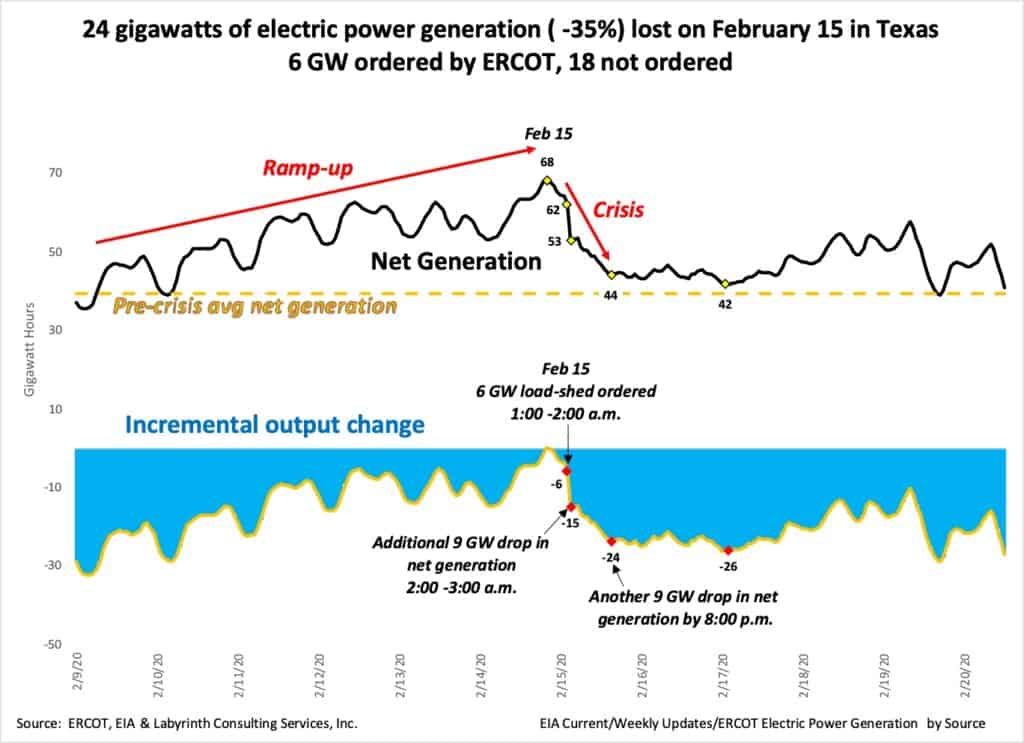
Figure 1. 24 gigawatts of electric power generation lost on February 15 in Texas. 6 GW ordered by ERCOT, 18 not ordered. (Source: ERCOT, EIA & Labyrinth Consulting Services, Inc.)
What Went Wrong?
According to critics, a chief cause of Texas’ grid failure was lack of winterization. In a study following the last major Texas winter storm in 2011, the Federal Energy Regulatory Commission (FERC) identified frozen sensing lines, frozen equipment, frozen water lines, frozen valves, blade icing, and low temperature cutoff limits as key reasons for plants going offline.
The failure to winterize adequately is because most of Texas’ electricity market is deregulated. Traditional, regulated utilities are guaranteed reimbursement for reasonable plant investments
 by eddielarry

