


While the Strait of Hormuz is getting all of the attention, there’s another major development involving Russia’s energy infrastructure that is getting surprisingly little mainstream media (MSM) coverage.
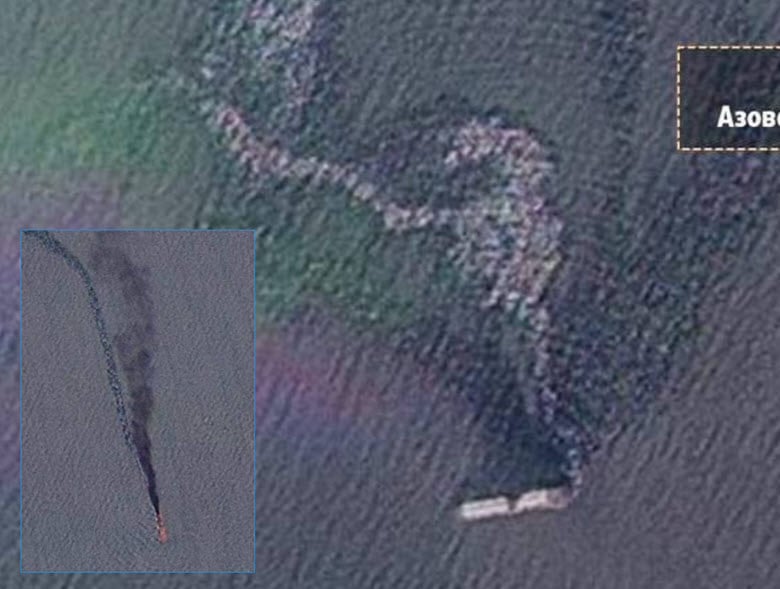
Over the past 2 days (July 8-10) Ukraine has successfully attacked and reportedly destroyed at least 30 Russian tankers in the Sea of Azov:
Ej ale wiecie, że Rosjanie dostali dronami w ok. 30 tankowców w mniej niż 72 godziny?✅Wiecie ile kosztuje tankowiec?✅Wiecie ile zarabia tankowiec rocznie dla Rosji?✅Wiecie, że wszystkie płynęły na Krym?✅Wiecie, że od poniedziałku duża część Krymu nie ma nie tylko paliwa,… pic.twitter.com/JpeZnINqcz
— Mateusz Lech (@MattLech23) July 9, 2026
This is notable because it represents an enormous ecological and soon human disaster for the region.
Notable too because the MSM just isn’t covering this at all, as evidenced by this morning’s WSJ front page:

If you were unaware of the Ukrainian tanker attacks, it’s because your failed state-level media has opted not to tell you about them. Which is why my most important role at Peak Prosperity is ‘Information Scout.’
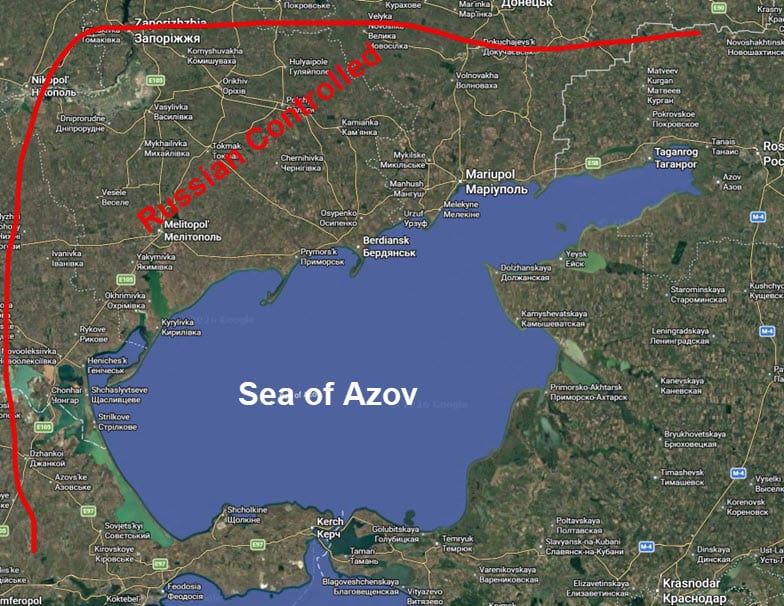
Also these attacks are notable because Russia controls all of the surrounding territory. However, Ukraine got drone boats and flying drones into that area without being detected or stopped, which really should be studied.
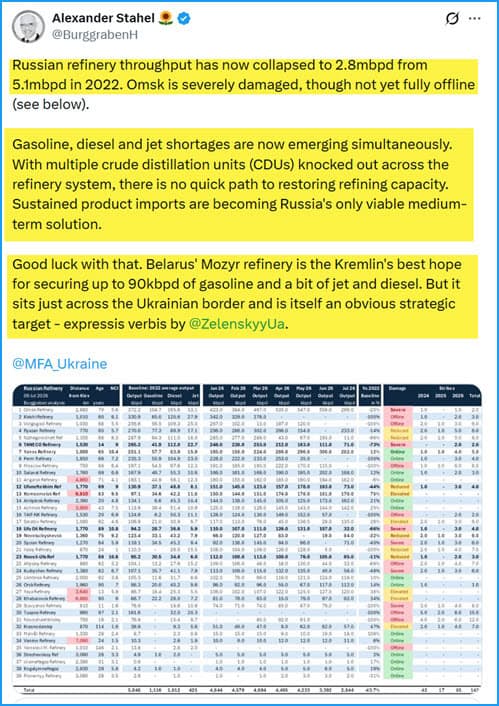
In addition, so many Russian refineries have been hit that its refined output is now down approximately 50%.
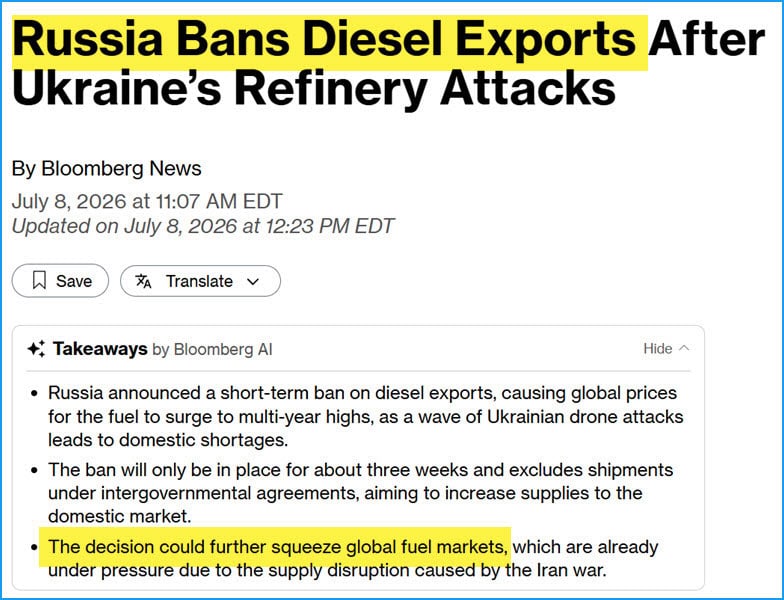
Russia used to be a major exporter of both crude oil and refined oil products, especially diesel and gasoline. Because of the massive, US-assisted attacks by Ukraine, Russia has just taken the extraordinary step of halting all diesel exports to the rest of the world.
The response within the diesel product markets was immediate and extremely large, vaulting over $10 higher per barrel in just a few hours:
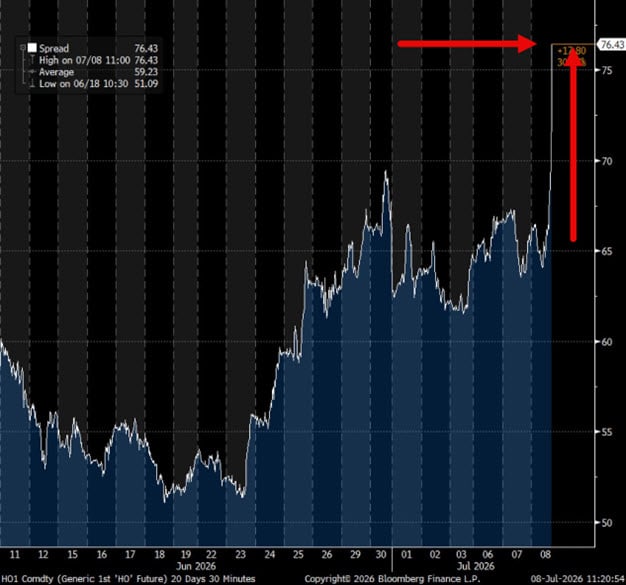
The conclusion is simple: diesel is about to get a lot more expensive, everywhere, and quickly.
And that’s due to the Ukrainian attacks on Russian energy infrastructure. Here we need to also point out that the Strait of Hormuz remains >50% blocked as compared to pre-war ship traffic levels.
Everybody depends on diesel, even if we don’t operate a diesel-powered vehicle. Diesel is how trucks and trains move goods long distances. Diesel is how farmers farm. Diesel is the lifeblood of the economy. We all depend on it.
Taken together, the world has never seen an energy shock like this before. I think I know why and what you should do to prepare. But it’s a long story which has taken me quite of invested time and energy to assemble, and so I am reserving that work for my subscribers.
In there, I discuss the likely mechanisms of narrative control, and how those are going to lead us straight off a cliff, and how building up your resilience buffers now, while you can, is vital for your future comfort and security.
 by cmartenson
