


The worst energy shock on record is far worse than you think. It’s time to take a careful look at the data.
Welcome, everyone, to this special Iran War report. I am the creator of The Crash Course, a multi-part video series that ties the economy to energy, and both of those to the environment (the Three E’s). The main conclusion of The Crash Course is that our system of debt-based fiat money is dangerously decoupled from the real world, and because it is, it will someday fail. It’s a case of fiction vs physics, and physics always wins.
Has that failure begun? I think it has. Is the failure picking up speed? It most certainly is, and oil is the lubricant.
Let’s make sure we’re all on the same page. I go over this in great detail in The Crash Course, but here’s the one slide that tells the tale. Oil and the economy are intimately related. Which makes sense, right? Raw material gets dug up out of the ground, which takes energy. They get transported and fashioned into other things, which takes energy. They are shipped to market, which takes energy. They are then bought by people who are sustained on food grown using a lot of energy.
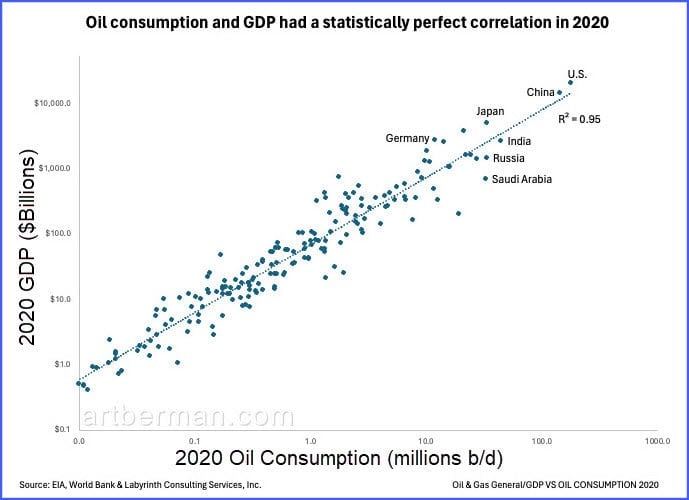
Which is why this chart is so robust. The more GDP you have, the more oil you are burning. We can make the statement that all economic activity requires work to be performed. And that work uses energy. Which means we can strip out the middleman here and say that economic output is a function of energy.
Trump on Oil
On April 23rd, Trump said this:
🚨 PRESIDENT TRUMP: "We are right now producing more oil than Saudi Arabia and Russian COMBINED!""In about a year from now, we'll be doing about DOUBLE that level.""We don't have an oil shortage. We have 'drill, baby drill.'" pic.twitter.com/Hwp2xOpS7y
— Nick Sortor (@nicksortor) April 23, 2026
Trump: “We are right now producing more oil than Saudi Arabia and Russian COMBINED! In about a year from now, we’ll be doing about DOUBLE that level. We don’t have an oil shortage. We have ‘drill, baby drill.'”
What’s astonishing is just how packed with falsehoods and misconceptions those three sentences are.
First, the claim that the US produces more oil than Saudi Arabia and Russia combined is not even remotely true. Here’s “End of Suburbia” with the facts:
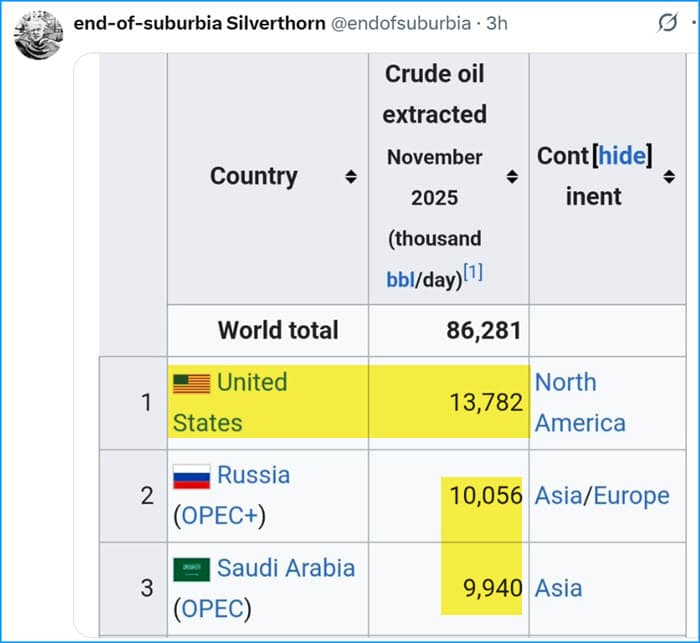
What Trump probably got confused by is what I presented in the prior special report, where the term “oil” had been confused with “petroleum,” which no longer means what it did a few years ago. Now “petroleum” means everything from ethane, to propane, to butane, right on up to heavy sour crude. Which is dumb.
But on the basis of crude oil alone, the US produces 13.5 mb/d while Saudi Arabia and Russia combined produce 20 mb/d. Or at least they did. Before the US and Israel waged their war of aggression against Iran.
Next, Trump then claimed that the US is going to double its oil output over the next year. Whoa, say what?!?
Let’s unpack that. First, here’s a chart of US oil production from Art Berman that breaks down the production into its various sources. The green, yellow, and blue all represent what we call ‘conventional’ oil production. 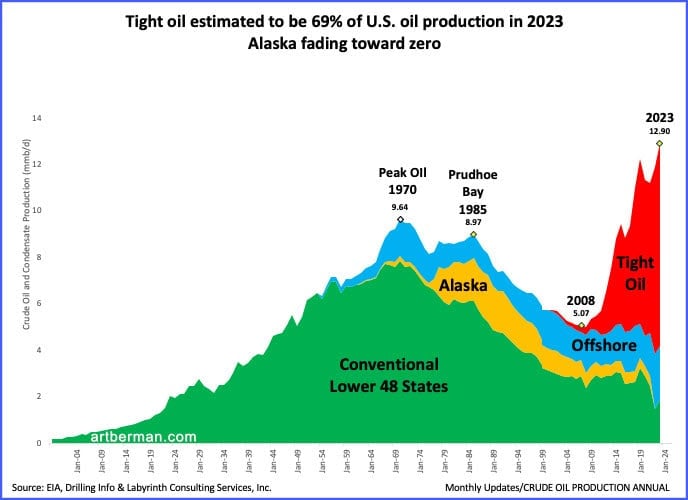
You will immediately observe that conventional oil production peaked in 1970 and has not staged any sort of recovery, and is in fact a lot lower today than it was 50 years ago.
So, I hope it’s not controversial to suggest that the green, the yellow, and the blue parts aren’t going to double over the next year.
Which means the red part, shale oil, would have to more than double its own output to make up for the stagnant conventional output.
Here’s where the shale plays are currently:
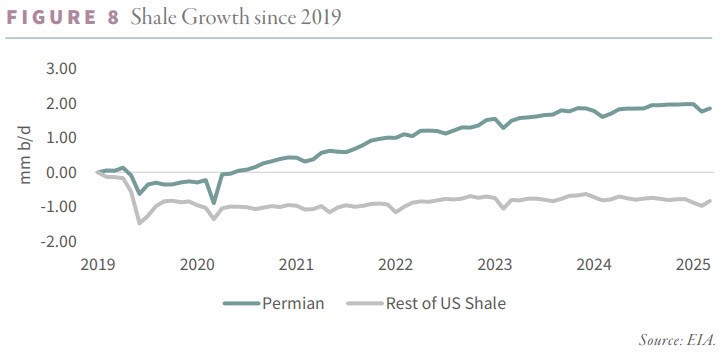
Oops. Would you look at that? All of the shale basins besides the Permian basin have been dead flat in their output since 2020 – 6 long years ago. So, I hope it’s not controversial to suggest those basins are not going to magically more than double their output over the next year.
This leaves all of the heavy lifting up to the Permian basin. So, let’s take a peek at the Permian, once again drawing on a truly illuminative chart made by Goehring and Rozencwajg.
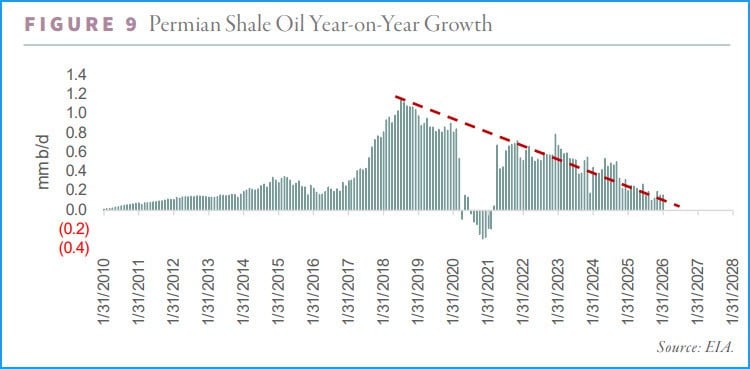
Uh oh! The Permian basin has been seeing steadily declining production gains since 2018.
Yes, it‘s been gaining, but less and less with every passing month and year.
For US crude oil output to double over the next year, the Permian would have to pack on a whopping 13.5 million barrels per day of new production. That is simply not going to happen.
Finally, Trump said this would be due to ‘drill baby drill,’ but the facts currently say otherwise:

Once again, this week we saw another decline in the number of oil rigs drilling in the US.
If we turn to the EIA itself, we see in their most recent annual energy outlook released on April 6th 2026, that the base case for oil production in the US is dead flat.
Further oil exports are expected to be dead flat out until 2050…
Accounting for the Missing Oil
But the big trouble is not the degree to which Trump is ignorant of US energy realities (for which I blame his incurious nature and his weak support staff equally), it’s the global energy shock that is set to get worse even if the Iran conflict magically stops right this minute.
Let’s start that conversation with this Goldman Sachs analysis:
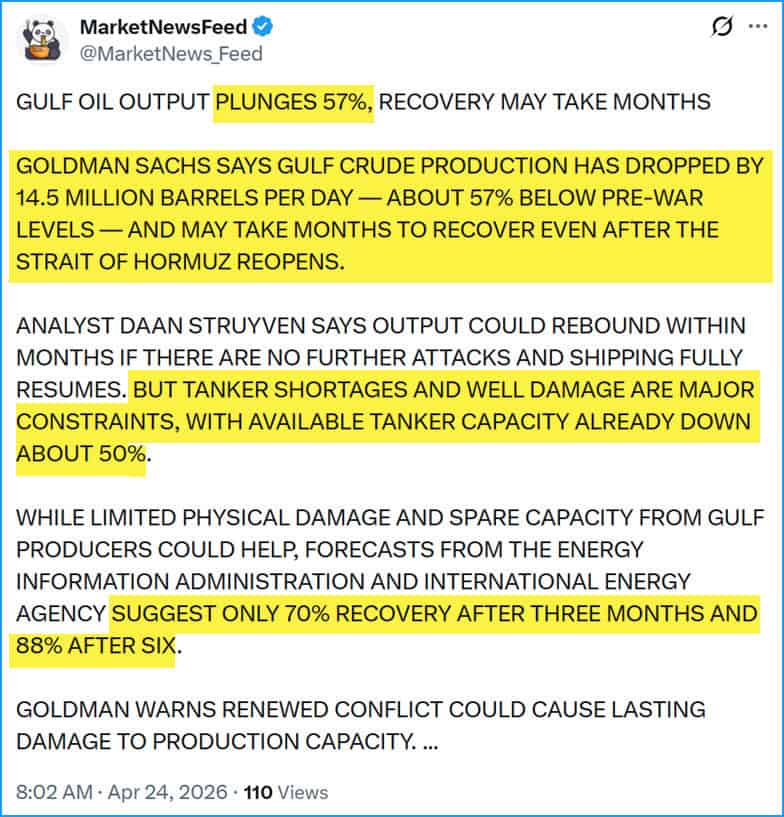
If we take the analysis at face value, then 14.5 Mb/d of oil + products are missing, which pencils out to 435 million barrels per month. Now that we’re closing in on month #2 of the war, that’s 870 million missing barrels, so far.
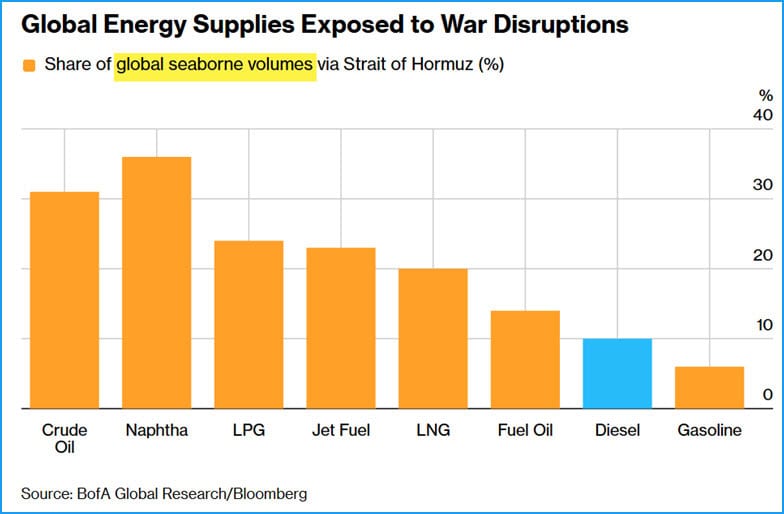
And remember, it’s not just the barrels themselves, but also the proportion of exported (seaborn) oil and related products that they represent. These are massive numbers:
Okay, let’s be extremely generous and assume the war ends this weekend and the Strait is fully reopened to bidirectional traffic Monday morning.
The GS analysis then says Gulf oil flows would only be 70% restored after three months. Again, being generous, let’s assume that the oil flows recover to 50% in month 1, 60% in month 2, and hit the 70% target in month 3.
Running the numbers, this pencils out to another 522 million barrels missing from the Gulf. That translates into ~1.4 billion barrels missing from the Gulf. And that’s only if the war ends tonight. I mean, right now.
The GS analysis then proposes that oil flows will restore to 88% by month 6. That pencils out to an additional missing 240 million barrels.
Here’s the math:
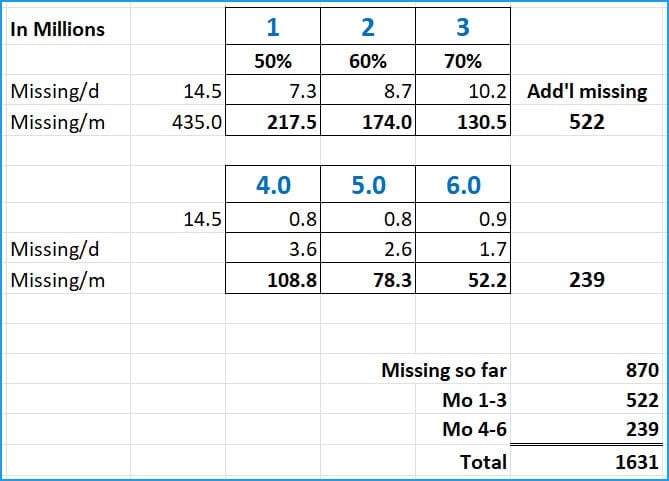
Add it all up, and the world will be missing 1.6 billion barrels (or 1600 million barrels). And that’s if and only if the Straight reopens on Monday. Each additional month of closure adds another 435 missing barrels to the total.
Now let’s staple that analysis to this chart from JP Morgan, perhaps the most important chart to assess the impact of the Gulf war and the clock that is ticking for the US and the West:
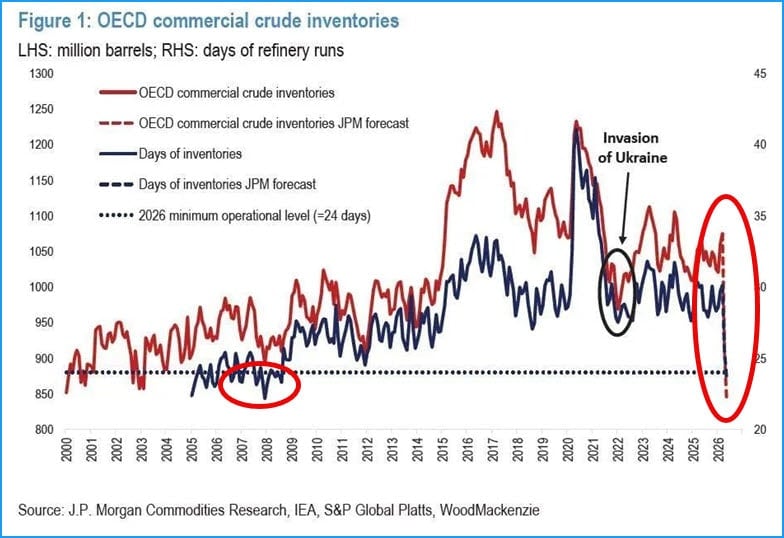
OECD commercial inventories are absolutely plummeting. There’s also an operational floor below which inventories might still exist on paper, but which are insufficient to continue full operations. I don’t know where that is, but it’s physically impossible to run inventories to zero. There’s a working threshold that cannot be exceeded.
Take a close look at this chart. Note that ‘days of inventories’ is about where it was in 2008 when oil spiked to ~$220 in today’s dollar terms ($147 then). That price spike in 2008 happened because inventories got tight due to supply being exceeded by demand by just a smidge for 4 out of 5 quarters. That’s all it takes to send the oil markets into the stratosphere.
To counter these declines in commercial inventories, oil must be released from strategic reserves, which Japan just did again yesterday. But there’s a political floor to those releases, where each country must decide how much oil it absolutely must hold in reserve just in case a war breaks out or something.
Here’s the math…even if the hostilities ended tonight, there’s another 760 million barrels of oil that will be missing from the Gulf which would drag commercial inventories basically to zero. That cannot actually happen.
So there must be releases from the OECD’s strategic reserves to cover the shortfalls. Sadly, there isn’t all that much in those reserves as compared to the numbers presented above:
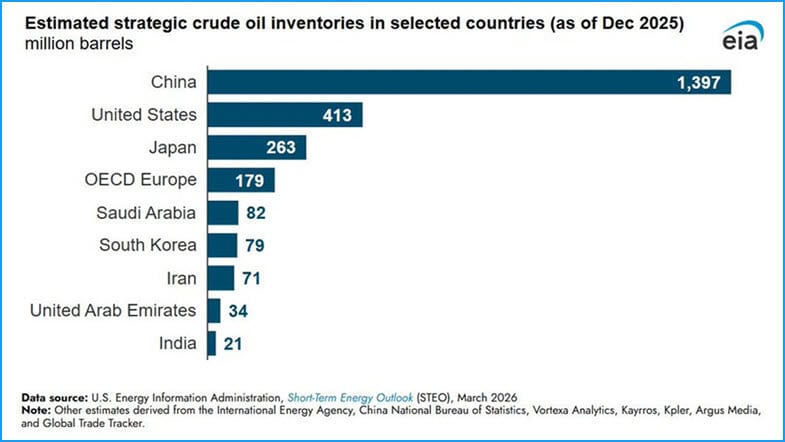
If you add up the strategic reserves of the US + Japan + OECD Europe you get 855 million barrels.
The missing 760 million barrels (again assuming the Straight is fully opened tonight) is 88% of those combined strategic reserves.
Which means that there really isn’t any possible way for the West to keep oil prices suppressed for much longer.
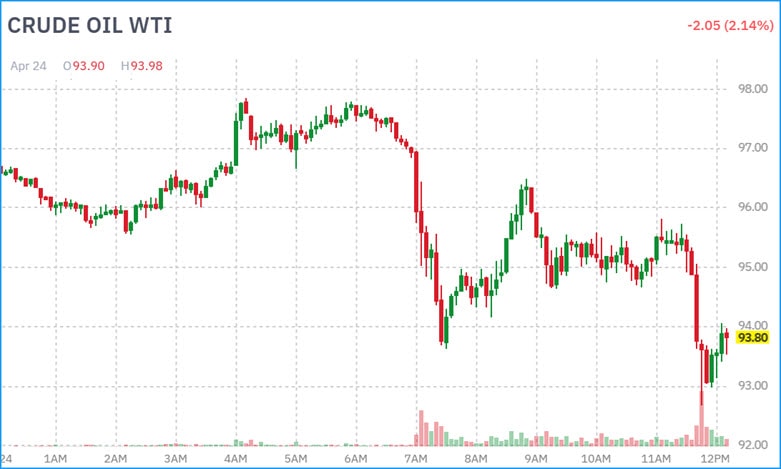
But still it tries…every day we see these brazen attacks on the price of oil in the US paper futures markets as we do here on Friday April 24th, 2026..
The problem, of course, is contained with the old P-Q chart.
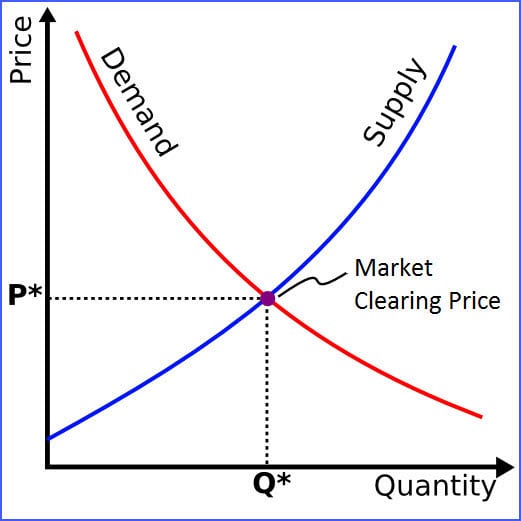
Price is supposed to be the settling mechanism to clear out any gaps between supply and demand. If supplies are too low, then the prices rise enough to kill enough demand to match the available supplies.
That’s how markets, true markets, are supposed to actually function. Price, Quantity, and Supply.
But the US wants oil prices to be lower for political reasons. So it’s been suppressing the price of oil. As you can already surmise, that just means the US is going to be selling its own oil to the world at subsidized prices.
And that’s exactly what’s been happening.
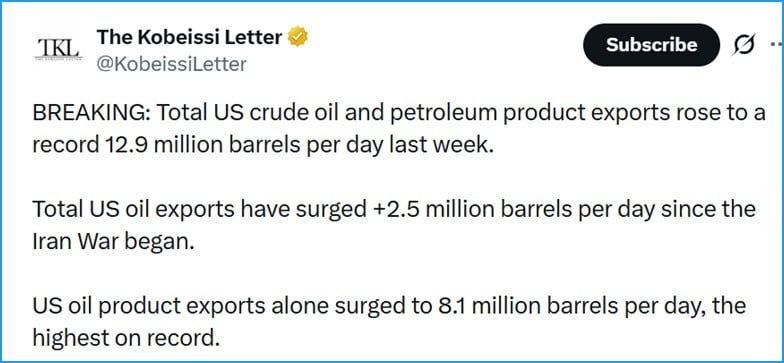
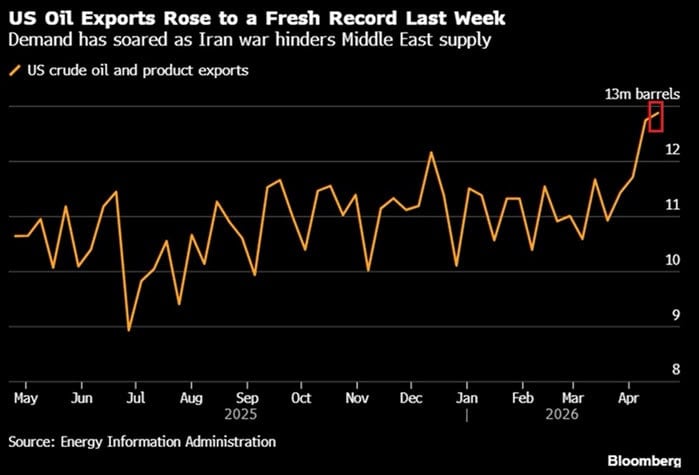
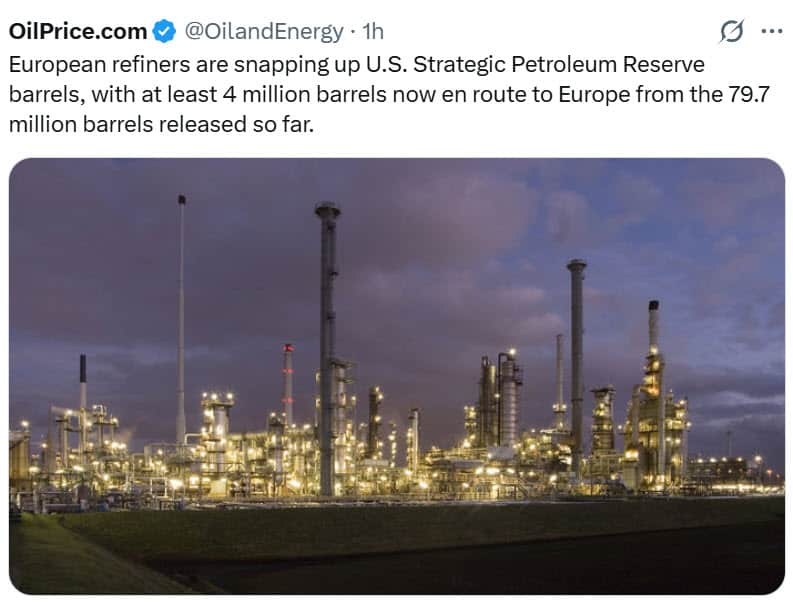
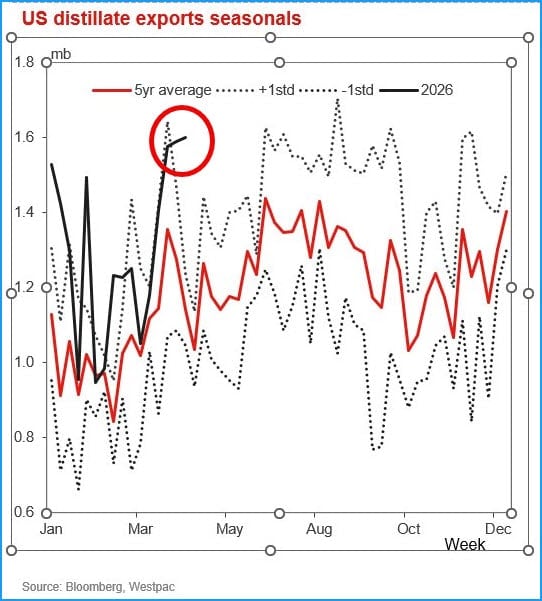
As I detailed in the prior report, those extra exports from the US are not coming from additional oil production, but from stockpiles and inventories. In other words, the US energy reserves and buffers are being exported at subsidized prices to maintain the illusion that things are not as bad as they actually are.
That ends very badly, and suddenly someday. I give it 2 – 4 weeks, tops.
The bottom line is that the situation is already well beyond ‘dire’ and it is now only a matter of time before it all spools apart. Iran merely has to wait – the clock is on its side. The US desperately needs the situation to end, immediately, and desperate people do desperate things.
Which is why I am expecting a resumption of kinetic warfare this weekend.
However, that could easily go quite badly.
There’s a lot more to this story, and I am producing at least four pieces of premium content for my subscribers each week. If you have wealth to protect, and you understand the power of accurate information, and value the truth, then you absolutely need and deserve full access to my reports.
Subscribe now for full access to today’s report as well as access to all of my premium content. It’s really important you know the stuff.


 by preppy