


There was a remarkable exchange between Tucker Carlson and Kevin O’Leary, the main spokesperson behind the proposed 9 gigawatt (!) data center in Box Elder County, Utah.
Tucker asked the most obvious of questions, which was, “Where will the energy for that come from?”
To which Kevin responded, “From a natural gas pipeline.” He went on to ‘explain’ that the pipeline was only 17% utilized, so it represented something of a gift that the data center was going to come along and use more gas from the pipeline.
In my usual style, I dug into that claim and immediately surfaced huge issues, the number one of them being that the 9 GW data center would consume more than 100% of the natural gas (NG) capacity of that pipeline before it ever got to the 9 GW scale.
Which leads to the next obvious question of mine, which is, “Why can’t these people do simple math?”
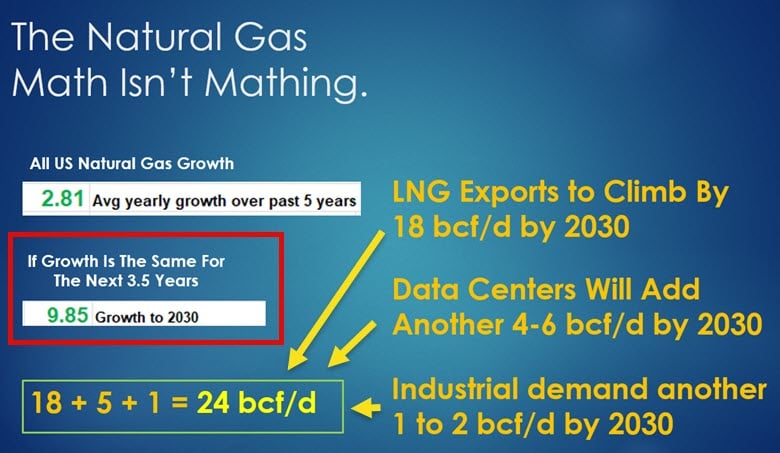
If the growth in natural gas output over the next five years matches the last 5 years (a big assumption), then it will add ~ 10 bcf/d by 2030. But the US is on track to add 24 bcf/d of new incremental demand by 2030. Why am I the one adding this up?
The Wall Street and Silicon Valley ‘way’ is to just shrug at these things and dismiss them as somebody else’s problem to deal with.
But this is energy we’re talking about. Molecules. Not abstractions, and not dollars, but real, physical things from the real world.
In this video report, I add up the demands on US NG supplies from LNG export terminal growth, data centers, and industrial demand. The conclusion is that we’ll be lucky to see NG supplies grow by 10 billion cubic feet per day (bcf/d) while demands are set to grow by 24 bcf/d.
That math doesn’t math.
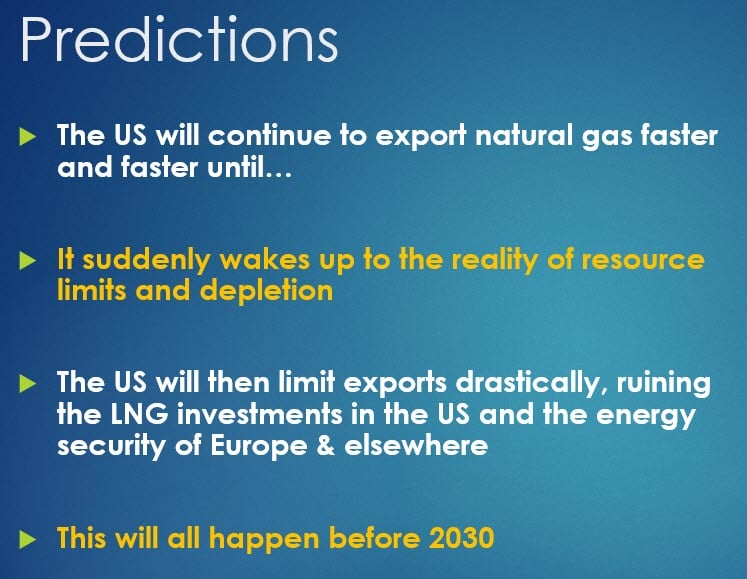
From that, here are my predictions:
It’s time to buckle up, folks…we’re on a runaway train.
Timestamps
00:00 The Energy Shock: Understanding the Current Crisis
02:16 Data Centers and Natural Gas: A Growing Demand
08:36 The Reality of Energy Consumption and Data Centers
13:26 LNG Exports: A Double-Edged Sword
20:36 The Math Behind Natural Gas Reserves and Resources
25:35 The Future of Energy: A Call for Realism

 by preppy