Insider

by
Chris Martenson
Every once in a while, an Off the Cuff interview is so important that we decide to make it available to the entire public. This is one of those occasions.
In this week's Off the Cuff podcast, Chris and Alasdair Macleod build on the insights laid out in Chris' recent mega-report last week on gold: The Screaming Fundamentals for Owning Gold. And specifically, they delve deeply into the poorly-understood topic of why Chinese demand has become such a game changer in recent years.
China’s Demand for Gold Has Trapped The West’s Central Banks
PREVIEW by Chris MartensonEvery once in a while, an Off the Cuff interview is so important that we decide to make it available to the entire public. This is one of those occasions.
In this week's Off the Cuff podcast, Chris and Alasdair Macleod build on the insights laid out in Chris' recent mega-report last week on gold: The Screaming Fundamentals for Owning Gold. And specifically, they delve deeply into the poorly-understood topic of why Chinese demand has become such a game changer in recent years.


by
charleshughsmith
Executive Summary
- The Deep State, and its dawning realization that Wall Street is a foe vs an ally
- Why Wall Street's threat to the dollar hegemony is of such concern
- History gives us many examples to predict a 'war of elites' (e.g. Wall Street vs the Deep State) is highly likely
- Who will lose? And what implications will it have for the rest of us?
If you have not yet read Have We Reached Peak Wall Street?, available free to all readers, please click here to read it first.
In Part 1, I sketched out why the financial sector—the Fed, Wall Street and “too big to fail” banks—pose a strategic threat to the nation, as their policies threaten one key foundation of American pre-eminence, the U.S. dollar. Should money and credit creation cause the dollar to lose its reserve status, the nation would lose the fundamental advantages that go with being able to print a reserve currency.
I then suggested that the Deep State might eventually wake up to the strategic threat posed by a self-serving financial sector, and this would lead to a showdown between the financial Elites and the Deep State.
The Systems-Level view: the S-Curve works on Wall Street, too
Long-time readers know that I often refer to systems-level dynamics, one of which is the S-Curve, which traces the rise, maturation and decline/crash of systems both natural and human-designed. An astonishing array of systems has been found to follow an s-curve, from the spread of infectious diseases to financial bubbles.
Why would Wall Street be uniquely immune to these systemic forces? I submit that Wall Street’s power has topped out and is about to decline precipitously, just like any other system which has over-reached by sucking its habitat dry.
I think we can chart Wall Street’s S-Curve thusly…
The Implications of a ‘War of Elites’
PREVIEW by charleshughsmithExecutive Summary
- The Deep State, and its dawning realization that Wall Street is a foe vs an ally
- Why Wall Street's threat to the dollar hegemony is of such concern
- History gives us many examples to predict a 'war of elites' (e.g. Wall Street vs the Deep State) is highly likely
- Who will lose? And what implications will it have for the rest of us?
If you have not yet read Have We Reached Peak Wall Street?, available free to all readers, please click here to read it first.
In Part 1, I sketched out why the financial sector—the Fed, Wall Street and “too big to fail” banks—pose a strategic threat to the nation, as their policies threaten one key foundation of American pre-eminence, the U.S. dollar. Should money and credit creation cause the dollar to lose its reserve status, the nation would lose the fundamental advantages that go with being able to print a reserve currency.
I then suggested that the Deep State might eventually wake up to the strategic threat posed by a self-serving financial sector, and this would lead to a showdown between the financial Elites and the Deep State.
The Systems-Level view: the S-Curve works on Wall Street, too
Long-time readers know that I often refer to systems-level dynamics, one of which is the S-Curve, which traces the rise, maturation and decline/crash of systems both natural and human-designed. An astonishing array of systems has been found to follow an s-curve, from the spread of infectious diseases to financial bubbles.
Why would Wall Street be uniquely immune to these systemic forces? I submit that Wall Street’s power has topped out and is about to decline precipitously, just like any other system which has over-reached by sucking its habitat dry.
I think we can chart Wall Street’s S-Curve thusly…
by
Chris Martenson
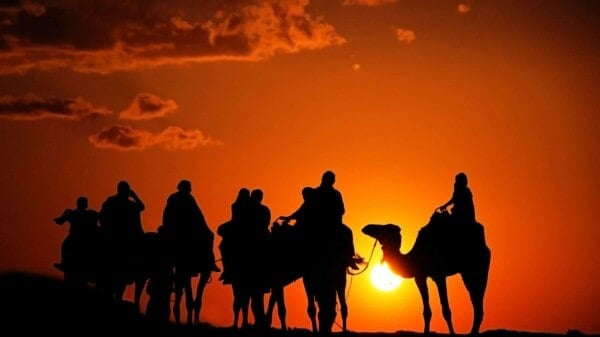
Off the Cuff: Preparing To Ride Camels
PREVIEW by Chris Martenson


by
charleshughsmith
Executive Summary
- The Fed's inability to recognize the true dynamics of the 2008 crisis has re-inflated a market bubble and unfairly rewarded the big banks
- More credit/liquidity cannot solve valuation/collateral crises. But that's exactly what central banks are trying to do.
- How the Crisis of 2014/2015 will differ from 2008
- Why this time, failure of the system will collapse under its futility
If you have not yet read Why 2014 Is Beginning to Look A Lot Like 2008, available free to all readers, please click here to read it first.
In Part 1, we noted the similarities between early 2008 and 2014, and dismantled Alan Greenspan’s claim that the global meltdown of 2008 was unforeseeable. If markets are fractal, as argued by Benoit Mandelbrot, then we can anticipate more “once in a lifetime” crises than economists expect, and that such crises will be less predictable than expected.
After reviewing some technical charts that suggest trouble ahead in 2014 (or perhaps 2015 if certain cycles hold up), I asked how asset bubbles can be considered a “social good” if the current bubble is not boosting employment or income for the vast majority of Americans. I also wondered how the presumed fundamentals of “growth” (sales, profits, creditworthiness, etc.) can continue expanding if income is stagnating.
In Part 2 of this report, the goal is to examine the policies of the states (central governments) and central banks around the world that have boosted assets such as stocks, bonds and real estate to new highs. What repercussions are they creating, why they are failing, and why they will cause a crisis that will be as damaging as 2008 — yet unfold quite differently…
What Will Be Different About the Crisis of 2014/2015
PREVIEW by charleshughsmithExecutive Summary
- The Fed's inability to recognize the true dynamics of the 2008 crisis has re-inflated a market bubble and unfairly rewarded the big banks
- More credit/liquidity cannot solve valuation/collateral crises. But that's exactly what central banks are trying to do.
- How the Crisis of 2014/2015 will differ from 2008
- Why this time, failure of the system will collapse under its futility
If you have not yet read Why 2014 Is Beginning to Look A Lot Like 2008, available free to all readers, please click here to read it first.
In Part 1, we noted the similarities between early 2008 and 2014, and dismantled Alan Greenspan’s claim that the global meltdown of 2008 was unforeseeable. If markets are fractal, as argued by Benoit Mandelbrot, then we can anticipate more “once in a lifetime” crises than economists expect, and that such crises will be less predictable than expected.
After reviewing some technical charts that suggest trouble ahead in 2014 (or perhaps 2015 if certain cycles hold up), I asked how asset bubbles can be considered a “social good” if the current bubble is not boosting employment or income for the vast majority of Americans. I also wondered how the presumed fundamentals of “growth” (sales, profits, creditworthiness, etc.) can continue expanding if income is stagnating.
In Part 2 of this report, the goal is to examine the policies of the states (central governments) and central banks around the world that have boosted assets such as stocks, bonds and real estate to new highs. What repercussions are they creating, why they are failing, and why they will cause a crisis that will be as damaging as 2008 — yet unfold quite differently…
Total 1089 items
 by sand_puppy